
Confidentiality Note & Disclaimer: This former top secret file of the Travel Superlight Agency is now unclassified. However, the Agency takes no responsibility for any harm that results from the release of this information and denies that the work of Agent J, or that of any other field agent it employs in its mission to perfect the art of ultralight minimalist traveling, will actually help anyone at all.
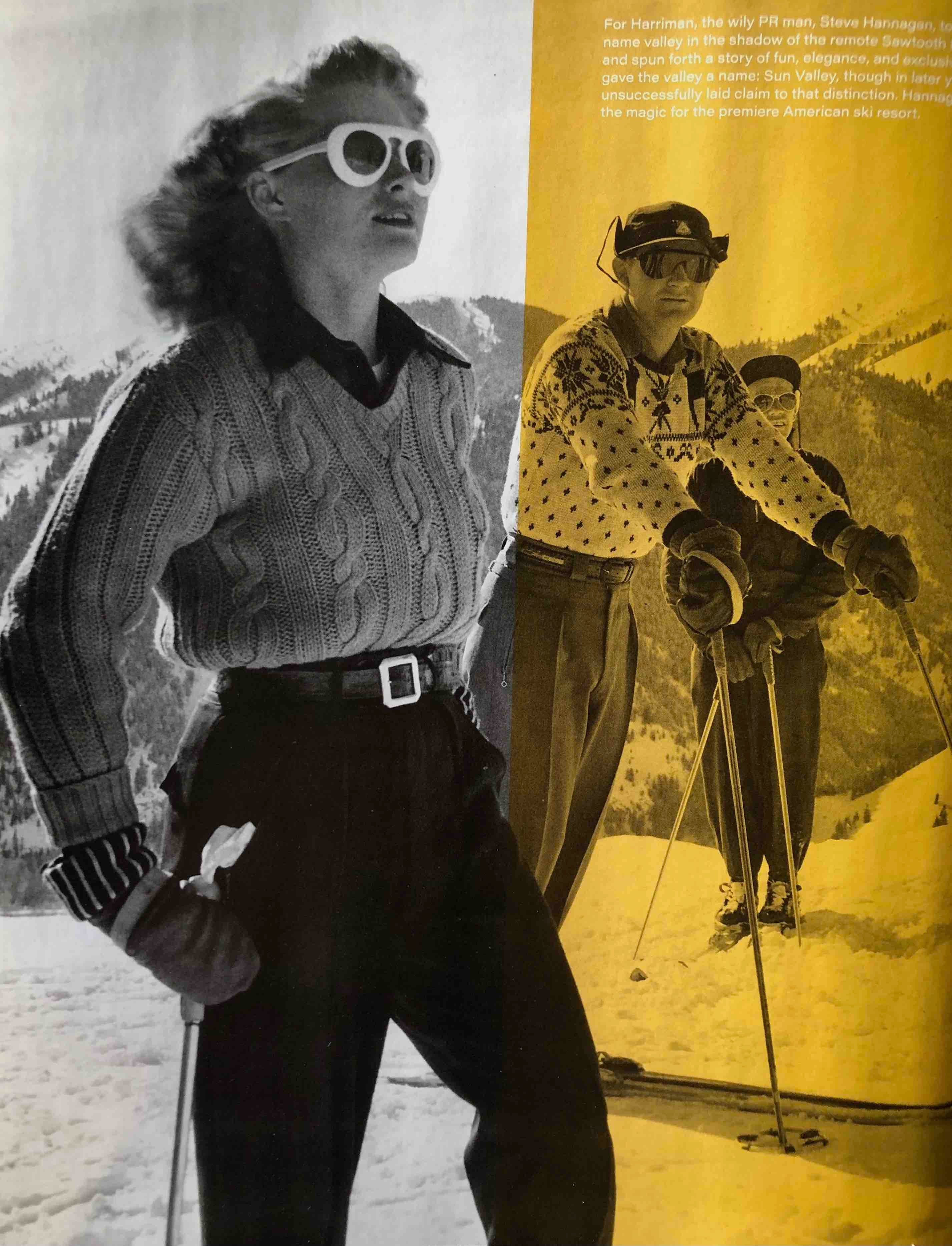
Wash, rinse, repeat. Forwards, backwards, repeat. Fix, fail, repeat. Agent W’s always in our heads. Fifty years in the business, he’s the one to listen to. Watch his every move, K.
An expert at dusting off an old trick in the bag and finding ways to make it better, he’s the one and only OG in the biz, IMHO. Always striving for perfection even though it forever stays just out of reach. He knows he’ll never cross the finish line but that’s not enough to keep him from constantly pushing boundaries, mostly just for the fun of it. A true master of his craft, I fully credit Agent W with my decision to become a field agent for the Travel Superlight Agency so many years ago…
Switching gears, you’ll be glad to hear I’ve now made it past the two week mark without busting another pair of sunglasses. All thanks to an important insight gained from my pre-pack up in Operations. It was when I picked up Agent P’s new eyeglasses case to add to the line up that I had this latest epiphany…
Remember how on one of my more recent missions to Vietnam, I made the horrible decision to pack both my eyeglasses and sunglasses in only one protective case, together, in order to save on space? Remember what happened? After taking the time to carefully unpack at Saigon Station, I opened up the case only to discover that my all-time favorite pair of P’s sunglasses lay in shambles (if I remember correctly, I think it was his “Tonopah Blues” model). So much for pairing things up.
The sad thing is that, back at Staging, I’d actually had a second dedicated sunglasses case just sitting there in my hands ready to go. Agent O had thoughtfully set a second one in my Go Bin. At the time, all I could think about was how much extra space a second case would take up in my backpack. So I’d left it behind. Um…yeah…won’t be doing that again.
Turns out Yoda was right. “The greatest teacher, failure is.” With every obstacle comes an opportunity. So for this Korea assignment, I had both Yoda and Agent W guiding my thoughts up in Staging. My wheels were turning with some decent traction. Could I somehow bring both protective cases without compromising the First Tenant of Superlight Travel? Doubling up on what’d surely be the bulkiest non-clothing item in my pack, exactly how was I supposed to “Keep it Small?”
Well, problem solved, K. Read on…
*****
Tracking
MISSION:  J35753-2025C
DCN:      7390019
TDY:      SEOUL, SOUTH KOREA
DATE:     2025-05-16
TIME:     7:43 AM KST
TO:       ALL FIELD AGENTS
FROM:     AGENT J
CC:       AGENTS R,W,P,K
SUBJECT:  TECHNIQUE MEMO 227 - EYEWEAR PROTECTION
Relevant Class
SEMINAR:     STAYING WITHIN BUDGET
INSTRUCTOR:  AGENT W
CLASS:       STOP BREAKING THINGS
CLASS NO:    AWT-113
Background
Traveling domestically and internationally is often turbulent. Items not properly protected in a standard issue ultralight minimalist pack can easily be damaged during times of rough transit.
No matter how carefully it’s guarded, a backpack will be repeatedly knocked, bumped, dropped, and tossed as one sits, stands, saunters, walks, runs, or even sprints while on the move between field stations. With each nudge, scoot, push, squish, and throw of the bag, your gear will again be tested to see if it can fully withstand the rigors of spending some quality time in crowded cars, buses, subways, streetcars, trains, planes, taxis, ride shares, and sidewalks. As one pinballs along their way to their final destination, they’d better hope that their pack and all of its contents were packed with utmost care and consideration.
The daily news feed is filled with countless stories that relay sad tales of befuddled world travelers who suddenly find their belongings scattered to the wind due to lack of proper foresight. Easy to spot out on the circuit, many soon-to-be-afflicted adventurers trudge around with ill-fitting backpacks. Adding salt to the wound, many of these beasts of burdens are haphazardly packed with staggering imbalances which cause them to lean to one side or the other.
Further compounding these frightening instabilities, knick knacks may be found lashed to pack exteriors by way of hooks, straps, and other heinous jerry-rigs. Thankfully, these hazardous dangling doo dads tend to catch the eye a safe distance away. In most cases, it’d be wise for the ultralight minimalist traveler to steer clear of impending trouble and head the other direction so as to avoid the risk of getting caught up in a toppling tempest.
Challenges
Even for the most calculating of the bunch, one of the stiffest challenges for those who carry way too much lies in how they protect their fragilest items. There’s perhaps no other gear at greater risk of cratering than failing to protect one’s collection of eyewear.
A long and sordid history of field agents galavanting around the world proves that a pair of unprotected eyeglasses or sunglasses will hopelessly get tweaked or worse, crushed to pieces, thereby potentially compromising an agent’s primary mission objective while at the same time inducing spirit-splitting frustrations, boatloads of cursing, and fruitless searches up and down town for acceptable substitutes that will surely incur unnecessary mission expenditures on a pair of cheap replacements that’ll barely hold up to commonly held metrics for function, style, and sturdiness.
The need to adequately protect an inventory of glasses begs that one bring at least two separate protective cases on any given journey, one for their sunglasses and the other for their corrective lenses. Too many road trips have demonstrated that these two pairs of glasses don’t play well together during times of long transit.
Lines must be drawn. Safe spaces must be declared. Even one tiny little poke or push in the wrong direction that crosses firmly established territorial lines, like the ones often drawn down the middle of the backseats, might be just enough to provoke the mother of all clashes between your two little pairs of specs and lead to absolute ruin. A road to shambles indeed.
However, to tackle this problem, one must proceed with caution. A knee jerk reaction of simply doubling up one’s gear, wholesale, without even the slightest degree of premeditation would be directly contrary to the guiding principles of featherweight ultralight minimalism of keeping things simple, light and free of redundancy. Intolerably, a second protective case will invariably add significant bulk to a small bag. Confounding matters, bringing two separate cases would take up too much precious real estate in an already space-challenged backpack where any extra room is usually reserved for other gear or future purchases.
Observations
One might think that a slick way to solve this formidable challenge would be to carry two pairs of glasses in a single protective case. On the surface, mixing two varieties of lenses in a single protective case sounds like a surefire way to double your pleasure and double your fun. However, as any parent of twins knows, this can also lead to double the trouble.

Throwing caution to the wind, such a daring approach was recently attempted by a senior TSA field agent on a field assignment overseas. Sadly, poor success was reported. While his eyeglasses made it through unscathed and unscratched, his favorite pair of sunglasses arrived in shambles. The overall state of affairs steadily declined from bad to worse when he stumbled across the 10-day forecast. With nothing but bright and sunny days ahead, drastic measures were necessary.
A total loss needed to be declared, immediately. Stomach sinking, he thought of the total chaos that would quickly ensue back at HQ. Strike teams would need to hastily convene, swarm the wipe boards, and spend long hours number crunching down in the Think Tank. Imagining the extra burden that this would place on resident agents to resolve the catastrophe was almost too much to bear.
After an hours-long wait that seemed like days, agents scrambled to set up a conference call over secure channels to discuss best solutions at hand. While a dead drop in the heart of Saigon was briefly contemplated, it was ultimately deemed too expensive and risky.
At the conclusion of the summit, it was determined that a shopping trip to the local market was the best apparent remedy, but only once the field agent had an opportunity to sharpen up his bargaining skills. Agent A was asked to join in on the call for a noteworthy assist, conveying top lessons learned from his experience traveling the world in his never ending pursuit to procure new products and technologies at a fraction of their listed retail prices.
Solutions
Back at the Think Tank, agents were busy at work trying to figure out how to best prevent future calamities. In an attempt to crack the tough nut, the strike team walked through what usually happens out on the streets. Almost always, during times of transit, an agent’s pack is not completely full. Typically, right at the onset of a journey, a few items are taken out of the pack to assist the traveling agent thereby freeing up some valuable real estate.
An intensive series of round table discussions revealed that wearing or consuming certain items during transit (e.g., sweater, snacks, water, etc.) that one might otherwise carry in their pack would likely free up just enough space for something else. As is often the case, the best solution was the most obvious one that’d been sitting right beneath everyone’s noses. A second protective case, whose unwieldy bulk would otherwise take up too much room, was found to fit nicely into the vacant space recently occupied by something else.
Wheels spinning fast, the team dreamt up a bold new approach to packing twin cases, employing a new strategy that would provide benefits not immediately apparent to the casual observer. It was determined that a repurposing of this second glasses case could be quite useful if one were to apply the proper amount of leverage. In a stroke of brilliance it was postulated that, if a field agent were to don their shades for their overseas flight, the now empty second case that would otherwise be left sitting idle since sitting on the tarmac could be put to beneficial use.

By way of this important work, the strike team was able to hastily demonstrate that one could successfully store soft and squishable items found in a standard issue ultralight minimalist pack in the now empty sunglasses case (or alternatively, one’s eyeglasses case if their not inclined to channel Corey Hart). Through a series of risky touch-and-go experiments, it was found that by stuffing an empty case with the smaller doodads that one typically packs, one could free up space in the bag that these items would otherwise occupy.
This cutting edge new practice repurposes an empty case from being something that’s solely used to protect one’s eyewear into a storage case for all the odds and ends that end up being so annoying to keep track of anyway. Easy to lose items can now be safely stored and secured away for the duration of one’s journey.
Despite the long hours, the buzz around the TSA conference table was quite palpable. So powerfully contagious was all the excitement that an entire set of strictly regimented and tightly controlled secure channel protocols was hastily brushed aside to hold a celebratory call in the giddy glory of gaining such marvelous insight.
Conclusions
As of this writing, the two-case technique has been proven out on a number of overseas field assignments. Common items that TSA field agents are now seen stuffing into their second cases include things like small toiletries, earplugs, earbuds, pack towels, tiny padlocks, empty ditty bags, and all sorts of other odds and ends. It’s been found that using one’s extra glasses case in such a fashion, while not being actively used to protect a second set of spectacles, turns out to be a great space saving technique that doesn’t significantly increase the net volume or weight of one’s standard pack.
Needless to say, there’s room for improvement for further refining the technique. For example, giving field agents a wider variety of case color or markings to choose from would allow one to more easily identify the contents of two otherwise identical looking cases. Experience has shown that it’s been far too easy to extract the wrong case without being able to tell the two apart.
Also, minor adjustments to the shape and form would be nice. Future design iterations using slightly smaller case sizes would be helpful so long as they’re still adequately sized to protect slightly oversized gear.
As an overall suggestion, it’s highly recommended that the TSA send Agent J on more extensive missions to collect additional information, expand the data set, and to beta test future design modifications. Additional time and funding should be secured to comprehensively test all options while also ensuring any potential hazards are properly mitigated.
The end goal, naturally, should be to provide for full quiet use and enjoyment of repurposed ultralight minimalist products around the world by locals, tourists, and field agents alike.
Index Scores
MASS:        7 - LIGHT ENOUGH
VOLUME:      4 - GOOD GRACIOUS, IGNATIUS
UTILITY:     8 - MIGHTY GROOVY
EFFICIENCY:  7 - TICKETY-BOO
OVERALL:     6 - I'M QUITE SURE IT'S NOT "THE BOOGITY MAN"
*****
LMK if you’ve got any questions, K. If not, please polish up and distribute as shown. Accounting will like this one. I’m looking forward to not getting razzed about breaking yet another pair of sunglasses…
BTW, I’m totally diggin it here South Korea. Got tons of cool pics to show you - art, architecture, fashion, signage, graffiti, etc. I even like how their written language looks. The whole lot, K. Lovin the vibe. Future missions? Yes, please. Sign me up.
See you in about a week…
J